 |
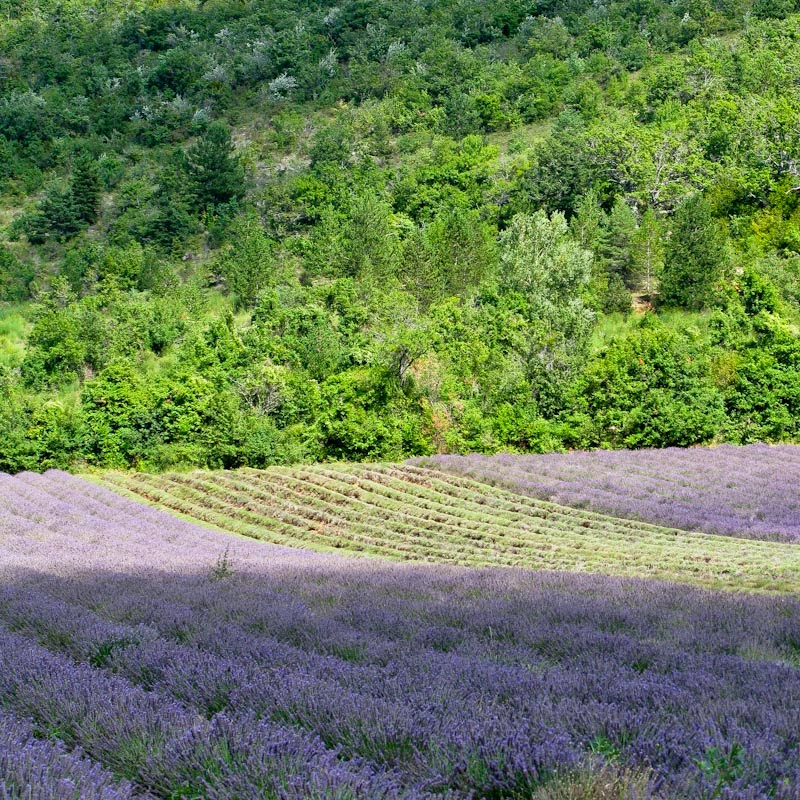
| Lavender field outside of Sault. Photo by W.T. Manfull |
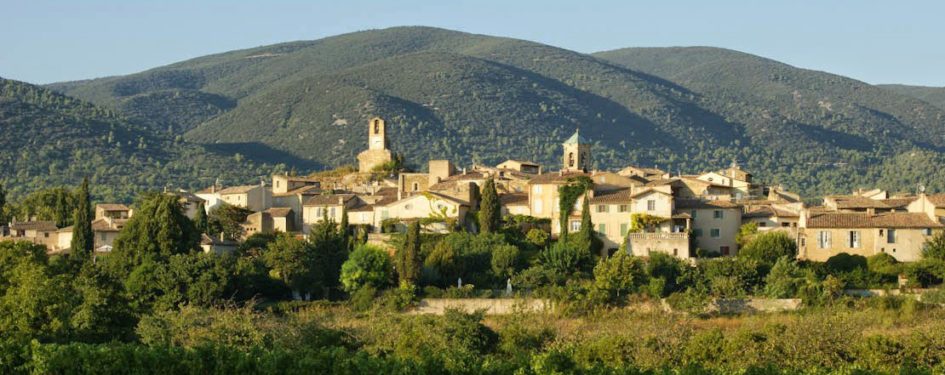
Many images come to mind when one mentions “Provence.” Rosé, bouillabaisse, truffles, sunflowers, colorful fabrics, hilltop villages, and the Côte d’Azur, for example. But none is more firmly entwined with Provence than lavender.
The most famous lavender field in Provence lies in front of l’Abbaye Notre-Dame de Sénanque, otherwise known as the Senanque Abbey, about 20 minutes away from Gordes. When the perfectly aligned rows of Lavandula are in full bloom, this is an unforgettable scene. Its sweet scent wafts around you, instilling a sense of calmness in even the most harried tourist (including whoever just navigated the narrow road that hugs the side of the mountain to get to the Abbey!).
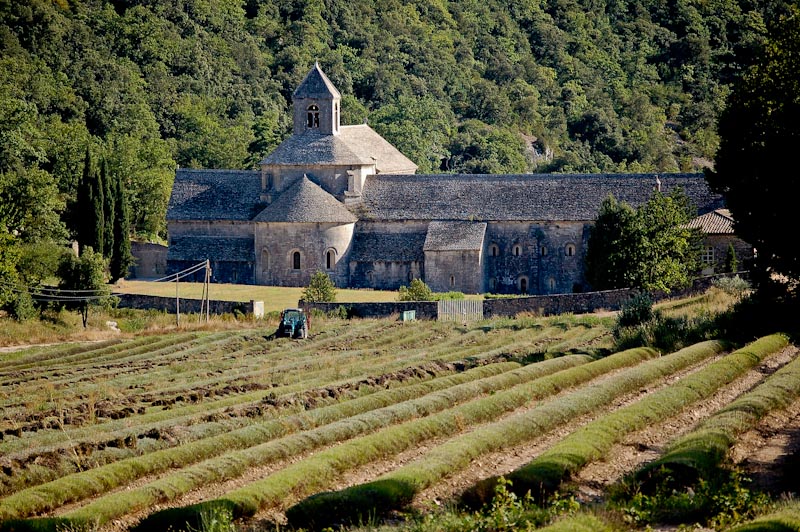 |
| l’Abbaye de Senanque after harvest. Photo by David Scott Allen. |
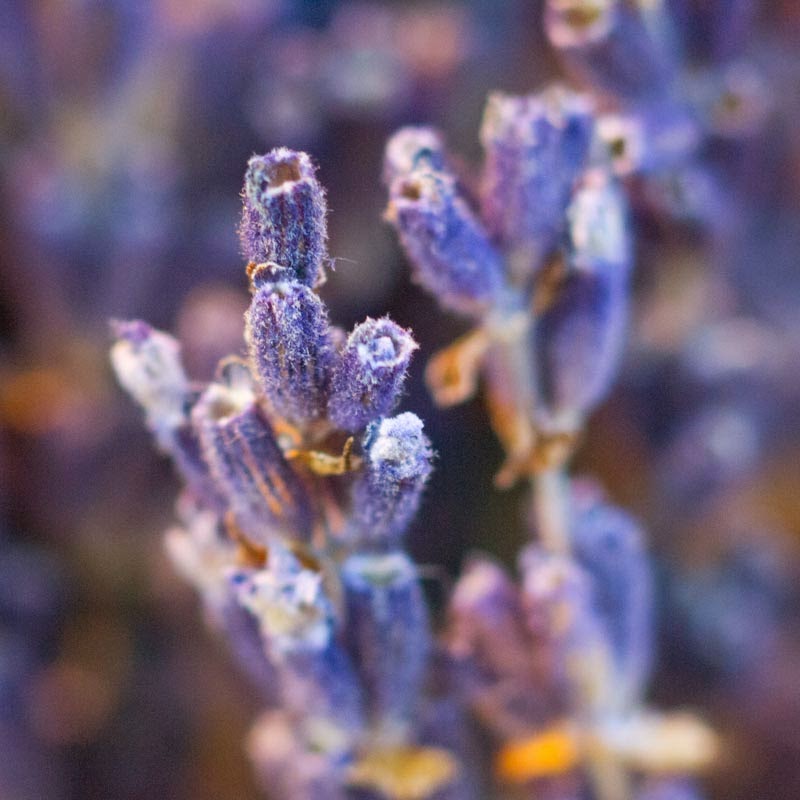 |
| Lavandin or Lavender? Photo by W.T. Manfull |
 Before I go further, I should make clear that the field in front of the Abbey, like most of what we all refer to as “lavender,” is actually “lavandin.” A bit of botany might help. There are three main species within the genus Lavandula that are used to produce essential oils: “true” lavender (L. angustifolia); spike lavender (L. latifolia, synonym L.spica); and lavandin (a hybrid of L.angustifolia and L.latifolia). Lavandin is hardier than “true” lavender, produces more oil, and is cheaper; however, its fragrance is inferior, lacking lavender’s subtle sweetness and slight woody undertones and suffering from unpleasing undertones of camphor.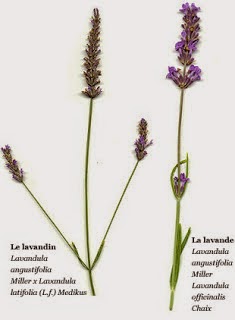
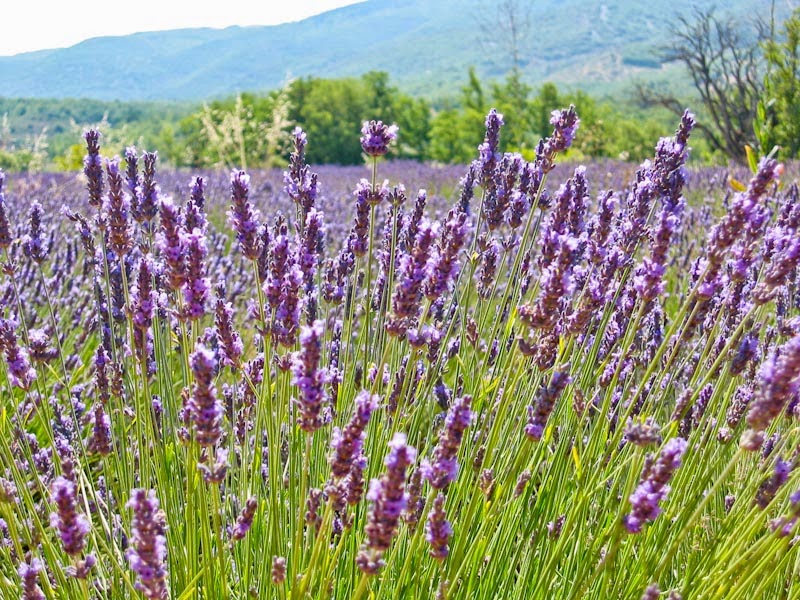 |
| Lavandin Field in the Luberon. Photo by W.T. Manfull |
While I am waiting for this scene to unfold, I will visit La Ferme de Gerbaud, in Lourmarin—my favorite village and where I will be staying for most of my trip—and I will tool around the hills of the Luberon in search of the fields of purple splendor I have visited in years past. Lavender will be blooming a little earlier in this area, south of Senanque Abbey—June 20th was the best guess of the woman with whom I spoke at La Ferme. I am counting the days.
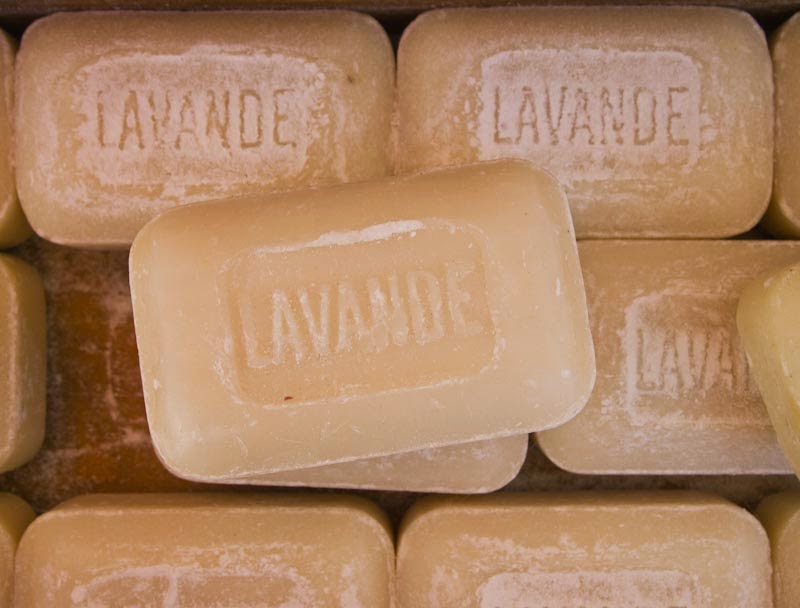 |
| Where does the word lavender come from? Probably from the Latin verb, “lavare,” which means “to wash” or possibly from the Latin word, “livendulo,” which means “livid or bluish.”. Photo by W.T Manfull |
________________________________________
Notes:
Lovely lovely lovely! We can't grow any of these very well in our harsh desert climate, but we find a substitute in Lavandula stoechas, Spanish lavender, native to the hottest, driest parts of Italy, Spain and Morocco. It has grayer foliage, and doesn't have the showy blossoms, but has at the blossom tips a cluster of sterile bracts that look like purple butterflies have alighted. We get what we can, where we can. So envy you your imminent trip to Provence during lavender season!
I really wish I were going with you, Susan! To see and smell the field at the abbey would be amazing. I didn't know the difference between le lavandin and la lavende. That is definitely something to be aware of when buying lavender buds both for their fragrance and for culinary purposes! I cannot wait to see what photos you bring back!
Top on my bucket list is to see the fields of lavender in Provence.